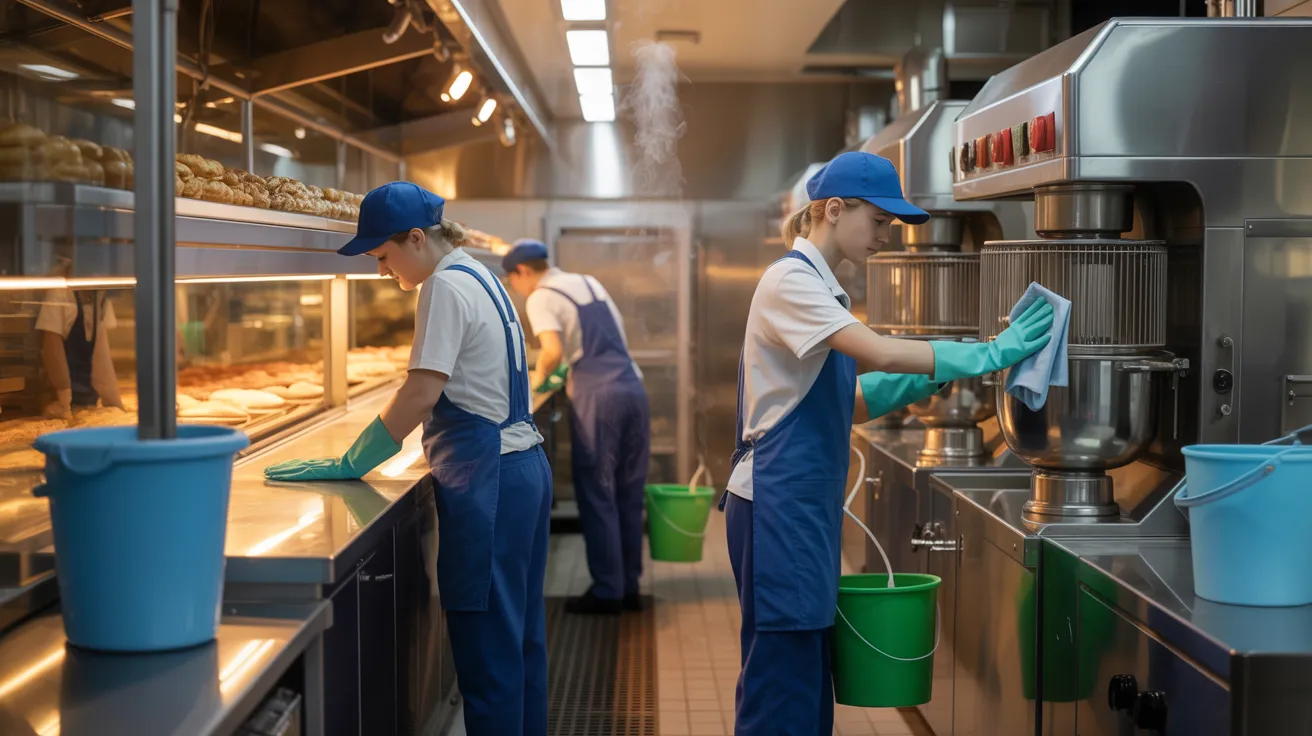
Professional food safety experts located in Brampton help maintain food service establishments, commissaries, baking enterprises, warehouses, and mobile food units in compliance. They treat high-touch surfaces, food-contact areas, equipment, floors, drains, restrooms, and preparation zones using approved sanitizers, at proper strength, and using documented contact periods.
Essential Summary
- Brampton food safety cleaning experts maintain restaurants, grocery departments, commissaries, warehouses, bakeries, schools, mobile vendors, and allergen-sensitive operations.
- High-touch surfaces, food-contact equipment, kitchens, floors, drains, restrooms, and storage areas are cleaned using zone-based workflows to reduce cross-contamination.
- Proper chemical concentration, suitability, and exposure duration are verified by trained contractors, with completion documented via checks, assessments, and remedial documentation.
- Hazard, production volume, format changes, accidents, and guidelines ought to direct maintenance timelines, with daily, regular, and annual tasks allocated by zone.
- Emphasize suppliers exhibiting hazard analysis knowledge, health regulatory competency, safety training instruction, protection, endorsements, coded implements, and audit-ready cleaning files.
Food Safety Cleaning Requirements for Brampton Facilities
Any Brampton facility that handles, maintains, prepares, packages, or offers food needs food sanitation. You must use it if your facility falls under public health review, food rules, or HACCP systems. That requirement covers restaurants, cafeterias, commissaries, grocery food departments, butcher shops, seafood counters, convenience stores, and institutional kitchens.
Proper hygiene protocols remains necessary in distribution centers, manufacturing facilities, cold storage areas, bakery retailers, educational meal programs, banquet venues, and meal delivery services. Mobile and temporary operations count too, including consult now food trucks, event sellers, and temporary stalls. Your facility needs established hygiene documentation when your staff work with ingredients, section ready-to-serve foods, heat finished items, or maintain allergen storage. In Brampton, sanitation stays discretionary; it represents lawful, operational, and customer protection standards.
Which Areas Do Brampton Cleaning Experts Cover?
You require experienced cleaning professionals who disinfect high-touch surfaces, cooking areas, floor areas, and bathrooms to ensure compliance with food safety and health standards. These areas are targeted because they carry the greatest contamination risk, falling hazards, and health code violations.
Understanding their cleaning procedures enables you to validate your facility's cleaning meets required standards and regulations.
High-Touch Surface Sterilization
implement a cleaning protocol
Preventing secondary contamination through rotating wipes, maintaining directional cleaning patterns, and organizing cleaning tools according to area maintains your cleaning system stays documented, defensible, and ready for inspection.
Cooking Zones, Walking Surfaces, and Restroom Environments
Professional cleaners in Brampton prioritize kitchens, floors, and restrooms given that each location involves specific contamination control, slip-and-fall, and public health requirements. In industrial kitchens, you need degreasing on cook lines, equipment exteriors, drains, prep surfaces, and splash zones to reduce contamination and pest pressure.
You should also expect documented flooring maintenance. is also provided as part of the service.
Restroom sanitation involves disinfecting touchpoints, fixtures, partitions, dispensers, and waste containers, restocking supplies and controlling odours. They also service restaurant moprooms, where chemical storage, sink hygiene, and drainage conditions can affect sanitation compliance and staff safety daily.
Food Safety Cleaning Significance for Brampton Businesses
Brampton operations require proper hygiene standards to fulfill health code requirements and pass audits. You also minimize cross-contamination by cleaning and sanitizing food-contact surfaces, equipment, and high-touch areas correctly. Most importantly, you help protect community wellness by reducing the chance of food poisoning in your establishment.
Food Safety Regulations
Food businesses in Brampton face mandatory safety protocols, making food safety cleaning critical to meeting health code requirements, protecting patrons, and eliminating enforcement action. You must maintain hygienic food handling zones, documented cleaning schedules, correct sanitizer application, and traceable training practices that correspond to municipal and provincial inspection expectations.
Retaining strong cleaning records proves due diligence for compliance reviews and confirms that your practices are reliable, replicable, and tracked.
Cross-Contamination Management
Following regulatory requirements depends on your skill in stopping cross-contamination in routine food work and sanitation. You should isolate raw items from prepared foods, disinfect work areas after use, and store chemicals away from food-contact items. Clear procedures reduce transfer risks and support consistent compliance during inspections.
Implementing allergen separation helps keep priority allergens from contacting shared surfaces, containers, or equipment. Deploy dedicated cutting boards, color-coded tools, and clear tool marking so workers don't combine products while preparing or distributing. Enforce hand hygiene following raw meat, seafood, eggs, or allergen-containing products. Replace wiping cloths regularly, and validate disinfectant levels using test strips. When you train staff to follow these controls every shift, you create a cleaner, safer operation that satisfies Brampton's food safety needs daily.
Public Health Protection
Should cleaning standards break, you don't simply risk a failed inspection—you expand the odds of foodborne illness impacting customers, staff, and the wider Brampton population. You also undermine your responsibility in safeguarding community wellness, especially in busy food facilities where pathogens travel quickly through surfaces, equipment, and touchpoints.
You require sanitation systems that eliminate soils, disinfect appropriately, and confirm results. This involves maintaining contact periods, using authorized sanitizers, documenting procedures, and educating staff to meet health-unit expectations. These measures prevent illness spread by decreasing microbial counts before contaminating food or hands. Throughout Brampton, effective sanitation safeguards susceptible populations, reduces outbreak risk, and demonstrates accountability. When you follow proper protocols, you go beyond requirements—you mitigate risk and facilitate secure food handling region-wide.
Why Is Cleaning Essential for Food Safety Compliance?
Committing to strict sanitation practices solidifies food safety compliance by minimizing contamination hazards, limiting pathogen development, and positioning your facility in accordance with sanitation requirements under HACCP-based programs and public health regulations. You validate that food-handling surfaces remain visibly clean and microbiologically controlled, facilitating documented preventive controls and inspection readiness.
Cleaning efforts additionally bolster allergen management by extracting residues that can trigger undeclared allergen exposure.
How Do You Arrange Commercial Cleaning Services?
surfaces can accumulate contamination
plan cleaning right before and following for effective event transition.
Selecting the Right Brampton Cleaning Experts: Key Considerations
Screen providers initially by their food-safe sanitation requirements—not budget alone. You need to confirm that every company meets CFIA, public health, and HACCP standards for your operation. Demand insurance verification, WHMIS compliance, training records, and management systems. Evaluate technician understanding of contamination dangers, chemical safety, and documented sanitation practices.
You should further examine service consistency and answerability. Request testimonials from Brampton food businesses, then review response times, corrective-action procedures, and communication standards. Validate the company supports supplier audits and can present inspection-ready documentation to regulators or external parties. Confirm equipment receives maintenance, color-coded implements are used appropriately, and facility-specific risks are identified. A qualified provider protects compliance, product integrity, and your brand reputation.
What details should a sanitation plan include?
Write out a framework that defines every sanitation task, standard, and responsibility before production begins. You should include cleaning schedules, approved products, ratios, contact periods, tools, and validation approaches for each area, surface, and device. Ensure you include pre-operational inspections, corrective actions, and employee training requirements.
Your plan should also address prevention of contamination, waste management, pest-control tactics, and scheduled records for restrooms, drains, floors, and food-contact areas. Specify how you'll separate raw and ready-to-eat processes, support ingredient tracking, and maintain accurate allergen labeling through validated cleaning between product changes. You should establish accountability, keep signed records, and assess results against regulatory standards, HACCP controls, and customer requirements. When gaps appear, update procedures immediately and retrain staff.
Frequently Posed Questions about the Plan
Can cleaning services accommodate overnight shifts in Brampton facilities?
If you run regulated facilities, you'll also require documentation that enable audits and ensure compliance.
Will sanitation professionals respond to hazardous incidents?
Yes, you can locate several Brampton cleaning professionals offering emergency response services. They manage hazardous materials, evaluate risks, contain affected areas, and execute rapid cleanup to reduce exposure and limit operational impact. You should confirm timeframes, training credentials, protocols, and disposal methods. If your facility must meet standards, choose a service that documents incidents, maintains standards, and supports audits.
Do environmentally safe disinfectants operate safely on food-contact surfaces?
Definitely, plant-based sanitizers perform safely on surfaces contacting food if you buy disinfectants approved for food contact that comply with regulatory standards. You need to verify application timing, dilution ratios, and rinse procedures before use. Plant-derived products reduce chemical burden, but you need proof of efficacy against specific pathogens. To ensure residue free surfaces, follow exact manufacturer guidelines and validate your disinfectant meets food industry regulations.
Will cleaning schedules adapt to seasonal shifts?
Absolutely, maintenance plans enable modification for seasonal variations. Modify timing, staffing, cleaning agents, and verification steps to correspond to operational cycles while upholding compliance standards. Lower equipment downtime through planning disinfection amid changeovers, peak volumes, and equipment use patterns. Additionally update standard operating procedures, training, and environmental monitoring to address seasonal hazards, additional allergens, or higher contamination levels. Periodic assessments maintain your program efficient.
Do professional cleaning services train employees on hygiene standards?
Yes, professional cleaning services often train your staff on hygiene standards. You get staff training on proper chemical use, exposure periods, cross-contamination prevention, equipment disassembly, and documentation. They generally follow instruction with HACCP, GMP, and CFIA or local public health regulations. Many also conduct sanitation audits to confirm adherence, identify gaps, and strengthen remedial steps. This helps you maintain consistent procedures, succeed in audits, and minimize contamination hazards regularly.
Conclusion
By partnering with Brampton food safety and commercial cleaning professionals, you aren't simply tidying—you keep your operation compliance-focused and your standards in compliance. From kitchens to processing floors, every clean surface and organized space decreases contamination and prevents costly issues. By scheduling cleanings on the right schedule and following a documented cleaning plan, you secure your team, customers, and your credibility. In a strictly regulated industry, clean spaces must be prioritized—they're key to business compliance.